
Can Gold Really Protect You in a Financial Crisis?
Why Gold Glitters When Markets Panic
When stock markets crash, inflation rises, or currencies weaken, one asset often captures investors’ attention: gold. Across centuries, through wars, recessions, and global uncertainty, gold has held its reputation as a dependable store of value. But what is it about this precious metal that gives it such enduring appeal—especially during economic turmoil?
In times of crisis, investors look for safety. Gold, unlike stocks or currencies, isn’t tied to the performance of a company or the policies of a central bank. It’s tangible, scarce, and globally recognized. That makes it more than a commodity—it’s a form of financial reassurance.
This guide explores why gold becomes the go-to asset when fear grips the market. You’ll learn how it protects against inflation, diversifies portfolios, and plays a central role in global finance—even in the 21st century. And by the end, you’ll have a clearer picture of whether gold has a place in your own investing strategy.
Gold as a Historical Safe Haven
Gold’s reputation as a “safe haven” isn’t new—it’s built on thousands of years of history. Long before stocks, paper money, or central banks existed, gold was used as currency, collateral, and a symbol of economic stability. During times of war, economic collapse, or political upheaval, societies have turned to gold to preserve wealth when other forms of value lost credibility.
From Empire to Inflation
- In ancient civilizations, gold was not only a store of value but also a form of universal currency.
- During the Great Depression, individuals hoarded gold coins, even as governments restricted ownership.
- In the 1970s, when inflation in the U.S. hit double digits, gold soared over 1,300% in value.
- After the 2008 financial crisis, investors rushed to gold as banks collapsed and trust in fiat currency waned.
Gold’s historical role doesn’t guarantee future performance—but it explains the deep emotional and cultural trust many investors place in it.
The Psychology of Gold During Crises
Investing isn’t just numbers—it’s behavior. And in times of uncertainty, emotion drives markets. Gold’s appeal is as much psychological as it is financial.
When inflation rises or banks look unstable, fear spreads fast. In that environment, gold’s physical, tangible nature becomes its greatest asset. It isn’t a promise or a number on a screen—it’s real, it’s scarce, and it’s not controlled by any government.
Why People Trust Gold in Chaos
- Certainty in uncertainty: Gold has a long history of retaining value when everything else is in flux.
- Tangible security: Investors often feel more confident owning a physical asset they can store or touch.
- Distrust in institutions: When governments print more money or raise debt levels, people look for alternatives they believe are immune to political interference.
In short, gold isn’t just an investment—it’s a form of reassurance. In a world driven by volatility, it offers a psychological anchor when logic is in short supply.
How Gold Protects Against Inflation
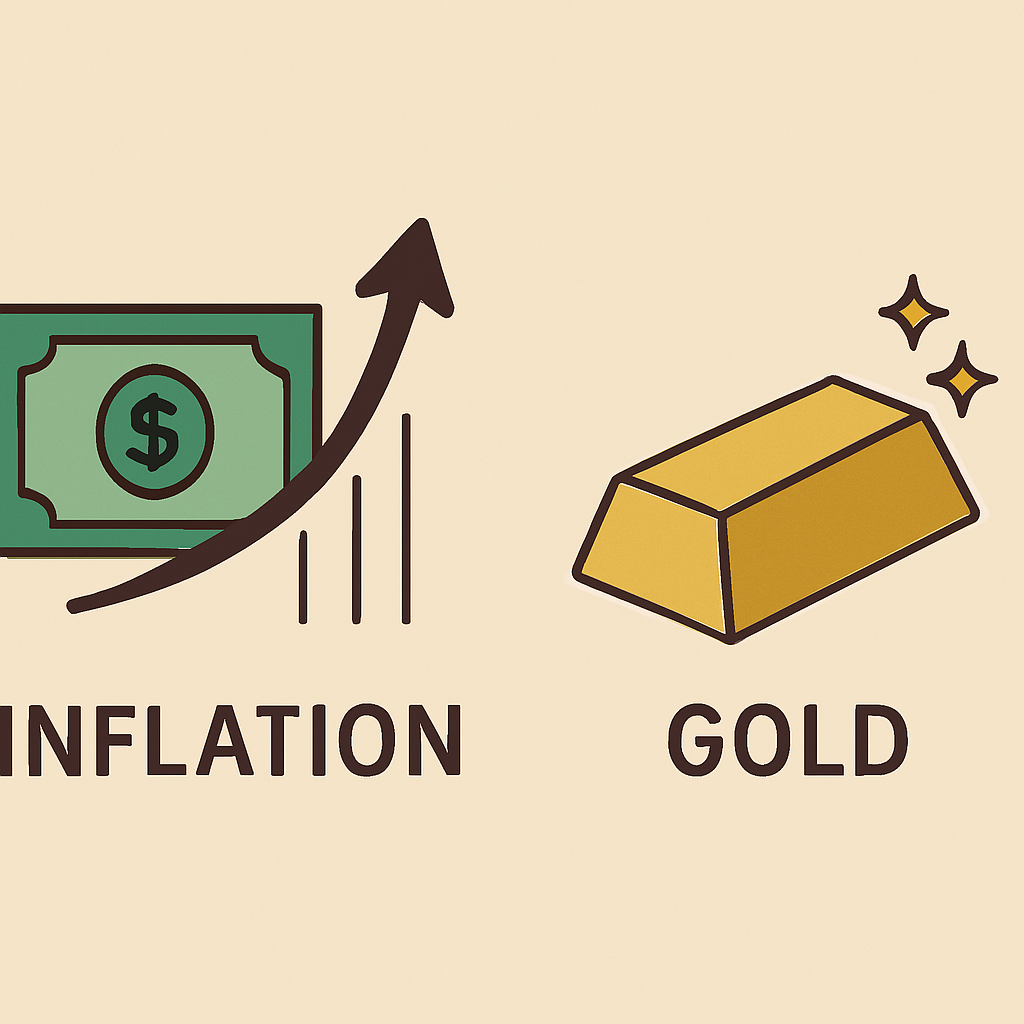
One of the most cited reasons people invest in gold is its ability to protect against inflation—a rise in prices that erodes the purchasing power of money. When the cost of goods and services increases, each dollar buys less. But gold, which isn’t tied to a currency or central bank, tends to retain its value over time.
Gold’s Inverse Relationship with Currencies
As inflation rises, the value of fiat currencies typically declines. Since gold is priced in dollars (or other major currencies), its nominal price often increases as money loses value.
Historical Evidence
- 1970s Stagflation: Gold rose from around $35/oz to over $800/oz as inflation soared and interest rates surged.
- Post-2008 QE Era: Following central bank stimulus efforts, gold climbed rapidly, peaking at over $1,900/oz in 2011.
- 2022–2023 Inflation Spike: As global prices surged due to energy shocks and supply chain issues, gold once again became a safe harbor.
While gold doesn’t perfectly track inflation month-to-month, over the long term it often performs well during periods of sustained price increases—especially when real interest rates turn negative.
Portfolio Protection and Diversification
One of the most practical reasons to invest in gold is diversification. Gold is considered a non-correlated asset—meaning it often moves independently of stocks, bonds, or real estate. When those assets fall during economic downturns, gold frequently holds steady or rises.
Reducing Portfolio Volatility
- A diversified portfolio spreads risk across asset classes.
- Adding gold can lower overall volatility and help cushion losses during bear markets.
- For example, during the 2008 financial crisis, the S&P 500 fell over 38%, while gold gained nearly 5%.
Modern Portfolio Strategy
Many financial advisors recommend holding 5%–10% of a portfolio in gold or other precious metals. This small allocation may seem minor, but it can have an outsized impact during times of severe market stress.
In short: Gold isn’t about chasing returns. It’s about stability when everything else is uncertain.
Real-World Events That Drove Gold Buying
Gold’s reputation as a crisis asset isn’t theoretical—its price and demand have surged during some of the most turbulent periods in modern history. Each of these moments reveals how gold reacts when fear, uncertainty, and inflation dominate the headlines.
The 2008 Financial Crisis
- As banks failed and markets crashed, investors rushed to safe havens.
- Gold rose from around $800/oz in 2008 to over $1,900/oz by 2011.
- Physical gold demand spiked globally, especially in the U.S. and Europe.
COVID-19 Pandemic (2020–2021)
- Amid historic stock market volatility and global lockdowns, gold soared.
- Prices peaked above $2,000/oz in August 2020 for the first time in history.
- Uncertainty, low interest rates, and record stimulus measures fueled demand.
2022–2023 Inflation Crisis
- Global supply chain issues, energy shocks, and war in Ukraine drove inflation to multi-decade highs.
- Investors turned to gold to hedge against central banks’ delayed response to rising prices.
- Despite rate hikes, gold maintained strength due to geopolitical risks.
2025 Trade Tensions and Currency Instability
- With new tariffs and dollar volatility returning in 2025, central banks and retail investors have once again increased their gold holdings.
- Global uncertainty and declining trust in fiat stability are pushing investors toward tangible assets.
These real-world events underline a recurring theme: when conventional markets struggle, gold often shines.
How Central Banks Use Gold
While individual investors look to gold for personal financial safety, central banks buy gold for geopolitical and monetary power. As of 2025, global central bank gold buying is near record highs—and that’s no coincidence.
Why Do Central Banks Buy Gold?
- Diversification from the U.S. dollar: Countries looking to reduce reliance on the dollar increase gold holdings as a neutral reserve asset.
- Financial insurance: Gold is a universally accepted asset that can support a country’s currency or provide liquidity during crises.
- Geopolitical strategy: Nations facing sanctions or trade conflicts (like Russia or China) use gold as an economic buffer.
Recent Trends
- China, India, and Turkey have steadily increased their gold reserves since 2018.
- The World Gold Council reported that 2022 and 2023 saw the highest central bank gold purchases in over 50 years.
- In 2025, these trends are continuing as global trust in fiat currencies and multilateral institutions becomes more fragile.
📌 Insight: If the world’s largest financial institutions are buying gold to hedge against instability, many private investors see it as a signal to follow suit.
Risks and Downsides of Gold Investing
While gold is often praised as a safe haven, it’s not without its drawbacks. Understanding the limitations of gold is essential before making it a core part of your portfolio.
Gold Doesn’t Produce Income
Unlike stocks or bonds, gold doesn’t generate dividends, interest, or rental income. Its value depends solely on price appreciation, which can take years and is often influenced by sentiment rather than fundamentals.
Short-Term Volatility
Though gold is viewed as stable over the long term, its price can be volatile in the short term.
For example:
- Gold fell sharply in early 2013, losing nearly 30% in a matter of months.
- Prices often decline when interest rates rise or inflation fears subside.
Storage and Security Costs
If you hold physical gold, you’ll need secure storage (like a safe or vault) and possibly insurance.
These extra costs can eat into your investment’s long-term return.
Market Timing Risks
Many investors rush into gold after a crisis has already begun—buying near the top.
Without a clear plan, emotional buying can turn gold from a hedge into a speculative gamble.
Gold Hype and Misinformation
Social media and sensational financial influencers often promote gold during turbulent periods. These narratives can inflate expectations beyond reason and mislead new investors into poor decisions.
📌 Takeaway: Gold has value—but it isn’t perfect. Like any asset, it works best when used with clear intent and proper strategy.
Ways to Invest in Gold
Gold can be accessed in several ways, each with its own advantages and risks. The method you choose depends on your goals, risk tolerance, and investment horizon.
1. Physical Gold
- Forms: Bars, coins, bullion
- Pros: Tangible ownership, privacy, no counterparty risk
- Cons: Storage, insurance, risk of theft
2. Gold ETFs (Exchange-Traded Funds)
- Examples: SPDR Gold Shares (GLD), iShares Gold Trust (IAU)
- Pros: Highly liquid, no storage worries, low costs
- Cons: Indirect ownership, subject to market risks
3. Gold Mining Stocks and Mutual Funds
- Invest in companies that mine and produce gold (e.g., Newmont, Barrick Gold)
- Pros: Potential for leveraged returns if gold prices rise
- Cons: Business risk, exposure to management decisions and market volatility
4. Digital and Tokenized Gold Platforms
- New fintech services offer fractional ownership or blockchain-based gold (e.g., Paxos Gold, Vaulted)
- Pros: Easy access, low minimums
- Cons: Regulatory uncertainty, trust in platform
📌 Strategy Tip: Many investors use a mix of physical and paper gold exposure, balancing liquidity and security.
Is Gold Right for Your Portfolio?
Gold isn’t a magic solution—but it can be a powerful tool when used wisely. Whether you’re worried about inflation, stock market volatility, or geopolitical instability, gold offers a way to hedge against the unknown.
When Gold Makes Sense
- You’re concerned about long-term currency devaluation or inflation.
- You want to reduce volatility in a stock-heavy portfolio.
- You prefer to have some tangible wealth outside of the financial system.
- You expect prolonged economic or geopolitical uncertainty.
When Gold Might Not Fit
- You’re focused on short-term growth or income generation.
- You already have sufficient diversification in non-correlated assets.
- You’re prone to emotional investing and buying into hype during crises.
A Balanced Approach
Most experts recommend 5% to 10% gold exposure in a diversified portfolio. This allocation is usually enough to offer stability without overly concentrating your investments in a single asset class.
📌 Final Thought: Gold isn’t a get-rich-quick asset—it’s a hedge. Its strength lies in preserving value, not multiplying it. If used appropriately, it can serve as a powerful safeguard in uncertain times.
Useful Links and Guides
- World Gold Council – Research & Market Insights
- Investopedia – Why Invest in Gold
- U.S. Mint – Bullion and Coins
- Morningstar – Top Gold ETFs
Other Topics Which May Interest You
The Truth About Buying the Dip in Volatile Markets – Save Sculptor